
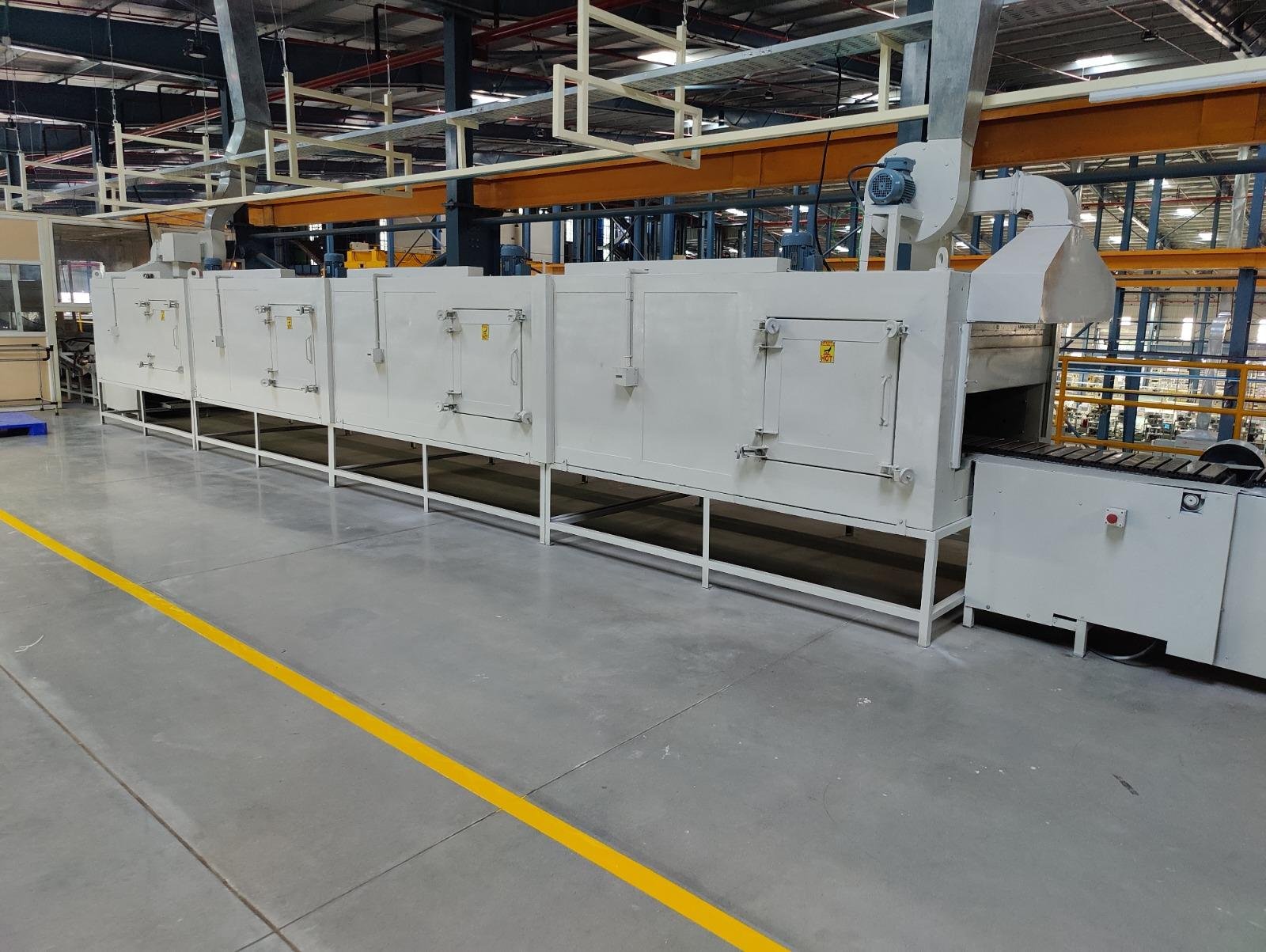
A well-tuned conveyor line can shape how consistently an industrial curing oven performs, even before heat is applied. Small shifts in belt movement change how coatings react, how heat reaches each surface, and how long parts remain under temperature. These details often determine whether a batch cures evenly or leaves operators troubleshooting preventable flaws.
Misaligned Belts Shift Parts out of Ideal Heat Zones
Conveyor belts that run slightly off-track move parts away from the calibrated heat pattern inside industrial curing ovens. These ovens rely on targeted heat fields where the coating receives an intentional amount of thermal exposure. Once parts drift out of those zones, curing reactions begin to vary across the surface.
A shifted path forces coated pieces into cooler edges or warmer centers, affecting the film’s integrity. This becomes more visible on parts that require a smooth finish, where even a small deviation in the paint curing oven zone can alter gloss levels, adhesion, or hardness.
Inconsistent Dwell Times Reduce Uniform Cross-linking
The time a part spends inside an industrial curing oven determines how completely cross-linking takes place. Misalignment causes parts to speed up or slow down at different points along the conveyor, disrupting this timing. Uneven dwell times leave coatings at mixed stages of cure, which becomes problematic once the product cools.
Parts that receive shorter exposure may show soft spots or incomplete bonding. Others that sit too long can become over-baked, changing coating durability. The oven is engineered to maintain a precise thermal cycle, but misalignment removes the consistency that cycle depends on.
Uneven Airflow Paths Form Hot and Cool Pockets
Convection inside industrial curing ovens is designed around an even load path. If the conveyor veers off-center, airflow channels change shape, creating warm pockets and cool areas. These shifts increase temperature swings that operators may not immediately detect.
Different airflow paths cause one side of a batch to cure faster than the other. Over time, this inconsistency can trigger quality concerns, as coatings exposed to cool pockets fail to develop the same surface strength or appearance as those in hotter regions.
Parts Drifting Sideways and Disrupt Coating Quality
Side-drifting pieces tend to scrape guides or touch buildup along the conveyor borders. This contact can disturb powder coverage or wet paint just before the item enters the heat chamber. Once inside the paint curing oven, these small marks become permanent defects.
The risk also increases for tall or irregularly shaped items. As they lean or shift sideways, the coating thickness changes across the profile, leading to glossy and dull patches after curing. Alignment helps maintain a centered, stable travel path that protects the finish.
Increased Mechanical Strain Lead to Premature Wear
A conveyor that pulls unevenly places strain on bearings, chains, and rollers. This strain grows each hour the system stays misaligned. Components begin to drag or overheat, which eventually interrupts the oven’s throughput.
That added friction shortens the lifespan of mechanical parts and introduces vibration that can shake loads while traveling through the heat chamber. Industrial curing ovens depend on smooth, predictable movement, and misalignment removes that stability.
Heat Distribution Suffer When Loads Travel Off-center
An industrial curing oven depends on symmetrical heat placement. Once loads travel even slightly off-center, calibrated heat patterns fail to reach each surface evenly. Coatings that rely on predictable thermal exposure lose some of their performance advantages.
Heat loss or unwanted concentration changes the way a coating bonds. For products requiring precise cure depth, off-center travel weakens the final structure. Manufacturers that work with specialty coatings can see costly deviations from specifications.
Product Spacing Change Unpredictably Along the Line
A misaligned conveyor alters spacing between parts as the belt shifts direction. Packaged or hanging parts that begin evenly spaced can gradually close gaps or drift apart. This affects how air circulates around each item in industrial curing ovens, which then affects coating uniformity. Unpredictable spacing can also cause shadowing—where air cannot reach certain surfaces because another part blocks the path. Once heat fails to reach a surface evenly, the final cured finish may show variations in thickness or texture.
Energy Use Rising When Ovens Compensate for Poor Alignment
Industrial curing ovens respond to load inconsistencies by working harder to maintain temperature. Stray airflow, shifting dwell times, and off-center movement cause the system to overheat or increase fan output. These adjustments raise energy consumption throughout the shift. Higher energy use eventually becomes noticeable in operating costs, especially in medium- to high-volume facilities. Reliant Finishing Systems is widely recognized for offering ovens that deliver dependable heat consistency, efficient airflow management, and durable long-term performance.
