
Introduction
Growing customer expectations have made distribution complexity impossible to ignore across modern supply chains. Manufacturers, distributors, and retailers now manage goods moving through wholesale, e-commerce, and physical locations, all while serving fast changing customers needs. Smooth logistics, clear distribution channels, and reliable order fulfillment shape daily performance.
Many supply chain challenges begin with omnichannel fulfillment, where online and offline demand must stay aligned. Rising demand volatility and sudden market disruptions often strain inventory planning, while fragmented distribution networks reduce visibility and slow store replenishment. Planning efforts may also touch tools like load planning software air cargo when global flows enter the picture.
To manage this pressure, distribution requirements planning software plays a central role in coordination. DRP helps align inventory planning with real demand, supports steady order fulfillment, and connects manufacturers, distributors, and retailers through shared data across complex networks.
How Distribution Requirements Planning Software Addresses These Challenges
Spreadsheets feel safe until volume rises and pressure hits. Spreadsheet-based planning, Excel-based planning, and paper-based planning struggle once planning complexity grows and scale limitations appear. Teams rely on manual planning and traditional planning, yet shifting customer demand across channels, distributors, and retail locations creates gaps. Distribution planning slows inside a wider distribution network, and supply chain planning drifts from real supply chain execution across distribution centers and warehouses.
That is where distribution requirements planning software earns attention. With DRP, demand planning connects directly to supply execution, turning signals into action. Demand-driven replenishment defines clear replenishment requirements, aligned to predictable replenishment cycles. Time-phased inventory supports steady inventory planning, guided by clear inventory control parameters and practical safety stock levels.
Daily work improves through coordinated inventory and shared inventory visibility. Real-time data and focused analytics support accurate order planning and smoother logistics decisions. Better inventory allocation keeps goods moving across distribution centers, warehouses, and retail locations without constant manual fixes.
Execution also changes. Automated distribution workflows handle routine moves, while responsive distribution workflows adjust when demand shifts. This structure supports a resilient supply chain that absorbs disruption and a responsive supply chain that keeps service steady as networks grow and conditions change.
What Is Distribution Requirements Planning Software?
Every missed delivery and excess stock problem often starts with weak distribution planning. distribution requirements planning software provides a clear definition and core purpose for modern distribution planning by keeping inventory aligned with real demand. DRP captures demand signals, balances forecasted demand with actual demand, and supports stable inventory planning that reflects true customer demand across the supply chain.
Unlike MRP or material requirements planning, which focus upstream on production inputs, DRP applies a downstream-focused view. It works alongside demand planning and supply planning, using structured planning logic and time-phased planning to manage distribution levels across a multi-echelon distribution network that includes warehouses, distribution centers, and distributors.
This approach guides inventory movement, improves inventory flow, and strengthens inventory positioning through accurate allocation, controlled ordering, and precise quantities. replenishment requirements turn into timely purchase orders, while physical execution connects naturally with tools like load planning software air cargo, keeping distribution activity aligned with real market needs.
Role of DRP in Time-Phased Inventory and Demand Alignment
Getting the right products to the right place at the right time is where distribution requirements planning software makes a real difference. At the core of DRP is time-phased planning, which connects inventory decisions directly to real demand signals. A reliable forecast gives planners visibility into future demand, supporting strong demand alignment instead of reactive fixes.
Clear time buckets help teams plan with confidence across daily, weekly, and monthly horizons. This structure keeps distribution planning focused and prevents last minute surprises. With better inventory positioning, stock is placed where it is most likely needed, not where it was needed before.
As plans move into execution, steady replenishment depends on accurate demand-supply synchronization. When supply moves in step with demand timing, inventory flows stay balanced and service expectations remain achievable.
Simple Real-World Distribution Planning Example
A missed store delivery can feel small, but it often starts much earlier in the network. In a simple real-world example, a central warehouse holds finished goods and supplies a growing distribution network made up of a distribution center, a regional warehouse, and each retail store. With distribution requirements planning software, teams use distribution planning and a clear DRP table to connect the supply source to every location while keeping inventory visible and balanced through steady warehouse-to-DC planning and warehouse-to-store planning.
Demand begins at the shelf. Daily unit sales, supported by historical sales data, shape reliable forecasts that reflect forecasted demand, actual demand, and real customer demand. These demand signals, paired with defined lead times and the right safety stock, create accurate gross requirements across a set planning horizon. With time-phased planning, the business maintains stable replenishment cycles without constant rework.
Inside DRP, those requirements turn into clear actions. Purchase orders are timed with precise planned order release dates and expected planned order receipt at each location. This process converts forecasts into executable distribution plans, supporting consistent distribution execution that keeps products moving and shelves stocked.
Key Features of Modern Distribution Requirements Planning Software
Demand Forecasting and Planning (Statistical & AI-Assisted)
Every strong plan starts with knowing what customers will need next. Distribution requirements planning software supports this by combining DRP, distribution planning, and accurate demand forecasting. With statistical forecasting and AI-driven demand models, teams can react faster as real-time demand signals flow in, allowing steady forecast refinement and clearer visibility into future inventory needs.
Automated Replenishment and Order Planning
Manual planning often slows teams down. Automated replenishment simplifies the process through smart reorder generation and clear order planning rules. By balancing order quantities and replenishment frequency with real lead times and known constraints, supported by time-phased replenishment, planners keep inventory moving without constant manual checks.
Safety Stock, Minimum Levels, and Priority Scheduling
Uncertainty is part of distribution. Flexible safety stock settings help protect service levels while respecting minimum inventory levels. Clear inventory prioritization rules guide decisions during constrained supply scenarios, so limited stock is used where it matters most.
Real-Time Multi-Location Inventory Visibility
Lack of visibility creates risk. Multi-location inventory visibility gives teams network-wide inventory transparency across locations. With real-time inventory monitoring, planners gain faster insight and stronger proactive decision-making across the distribution network.
Warehouse and Channel Synchronization
Disconnected operations lead to delays. Warehouse synchronization aligns distribution centers with active sales channels. Strong channel synchronization supports unified fulfillment and smooth cross-channel inventory alignment, even as demand shifts between channels.
Integration with ERP, WMS, TMS, and Supplier Systems
Planning works best when systems connect. ERP integration, WMS integration, TMS integration, and supplier systems integration place planning directly inside supply chain execution. Shared data creates end-to-end visibility and improves transportation coordination, including load planning software and air cargo planning, so plans move cleanly into execution.
Alerts, Exception Handling, and Analytics Dashboards
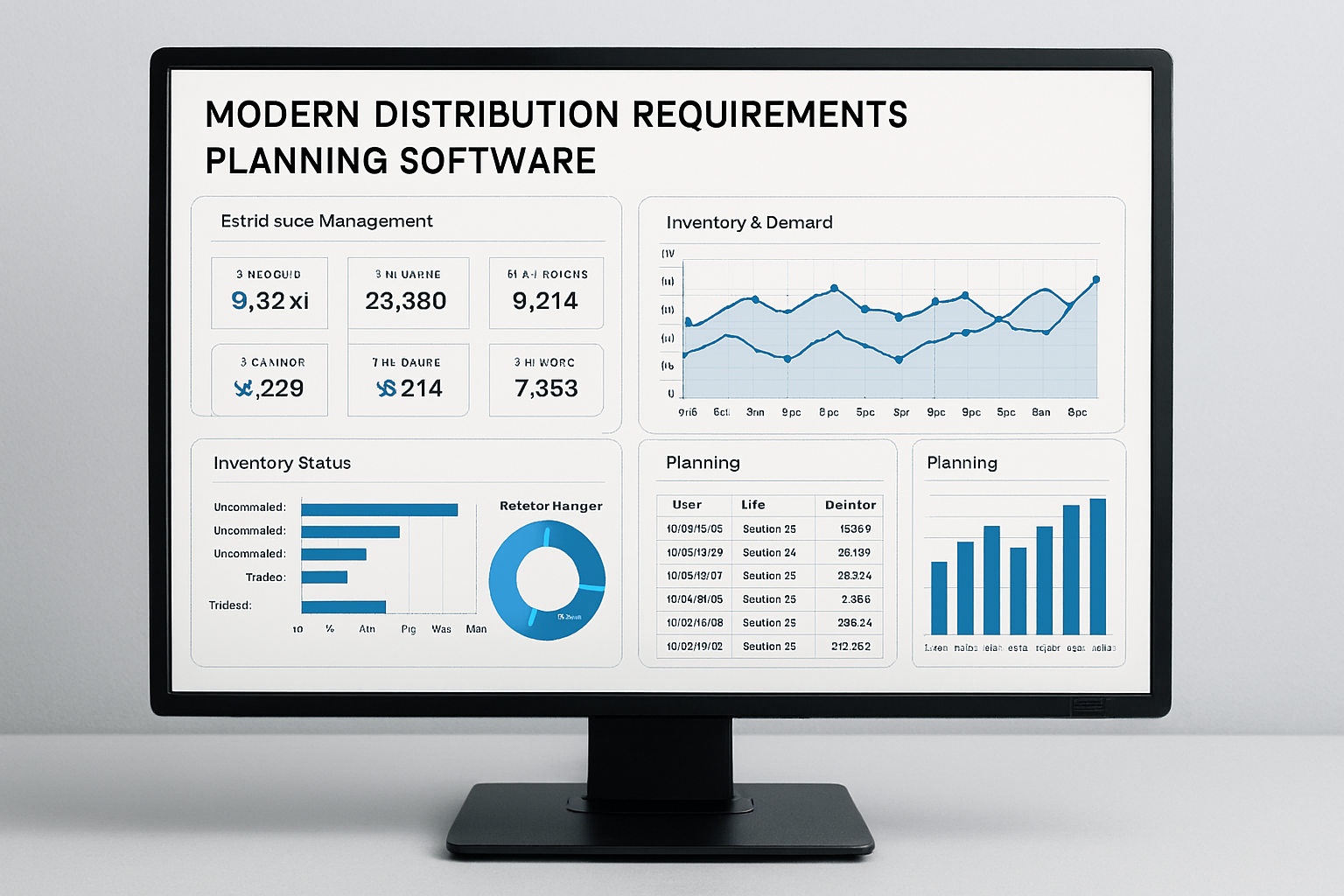
Problems rarely wait for meetings. Timely alerts and structured exception handling highlight demand spikes, delays, and rising inventory risks early. Clear analytics dashboards track KPIs and support steady gains in planner productivity without added complexity.
Benefits of Using Distribution Requirements Planning Software
Reduced Stockouts and Excess Inventory
Running out of the right products or holding too much stock creates daily stress for distribution teams. distribution requirements planning software brings structure to the distribution network by connecting distribution planning systems, distribution centers, distribution channels, warehouses, and multi-location planning. With DRP, teams gain clear inventory visibility and better inventory management, which improves inventory availability while reducing stockouts, overstocking, and excess inventory. Reliable demand forecasting, real demand signals, accurate lead times, and time-phased planning keep product availability aligned with actual needs.
Lower Carrying and Transportation Costs
When inventory moves with purpose, costs start to fall. Smarter replenishment, controlled replenishment timing, and steady replenishment frequency help lower inventory carrying costs and holding costs, supporting ongoing cost reduction. Improved logistics efficiency comes from better load planning and shipment consolidation, which raise transportation efficiency and reduce transportation costs. Inventory flows stay balanced instead of rushed or delayed.
Faster and More Accurate Planning Decisions
Planning slows down when data feels scattered or outdated. With shared planning visibility and trusted real-time data, planning cycles become shorter and planning accuracy improves. decision-making feels clearer across demand planning, supply planning, and sales forecasting. Strong coordination among operations teams supports faster responses without constant rework.
Improved Service Levels and Customer Satisfaction
Consistency builds trust with customers. Better order fulfillment and steady delivery performance raise overall service levels across the network. As fulfillment reliability and service reliability improve, the customer experience feels smoother and more predictable. This stability often leads to higher customer satisfaction at every point of delivery.
Conclusion
The real advantage starts when distribution requirements planning software brings calm to daily pressure. In a modern operation, its strategic value shows up through tighter demand alignment, steady cost reduction, and better efficiency across the supply chain. Clear visibility helps teams see issues early, while balanced inventory levels reduce stress caused by excess inventory.
With DRP connected to ERP, planning gains automation and practical control across wide distribution networks. Distributors can respond faster as stockouts drop and inventory management becomes more consistent. Strong inventory optimization supports resilient operations that rely on data-driven signals and stay future-ready as demand shifts.
A thoughtful evaluation helps leaders see where gaps remain and which solutions fit real workflows. Timely adoption turns planning insight into action, helping teams move forward with confidence and clearer priorities.
