
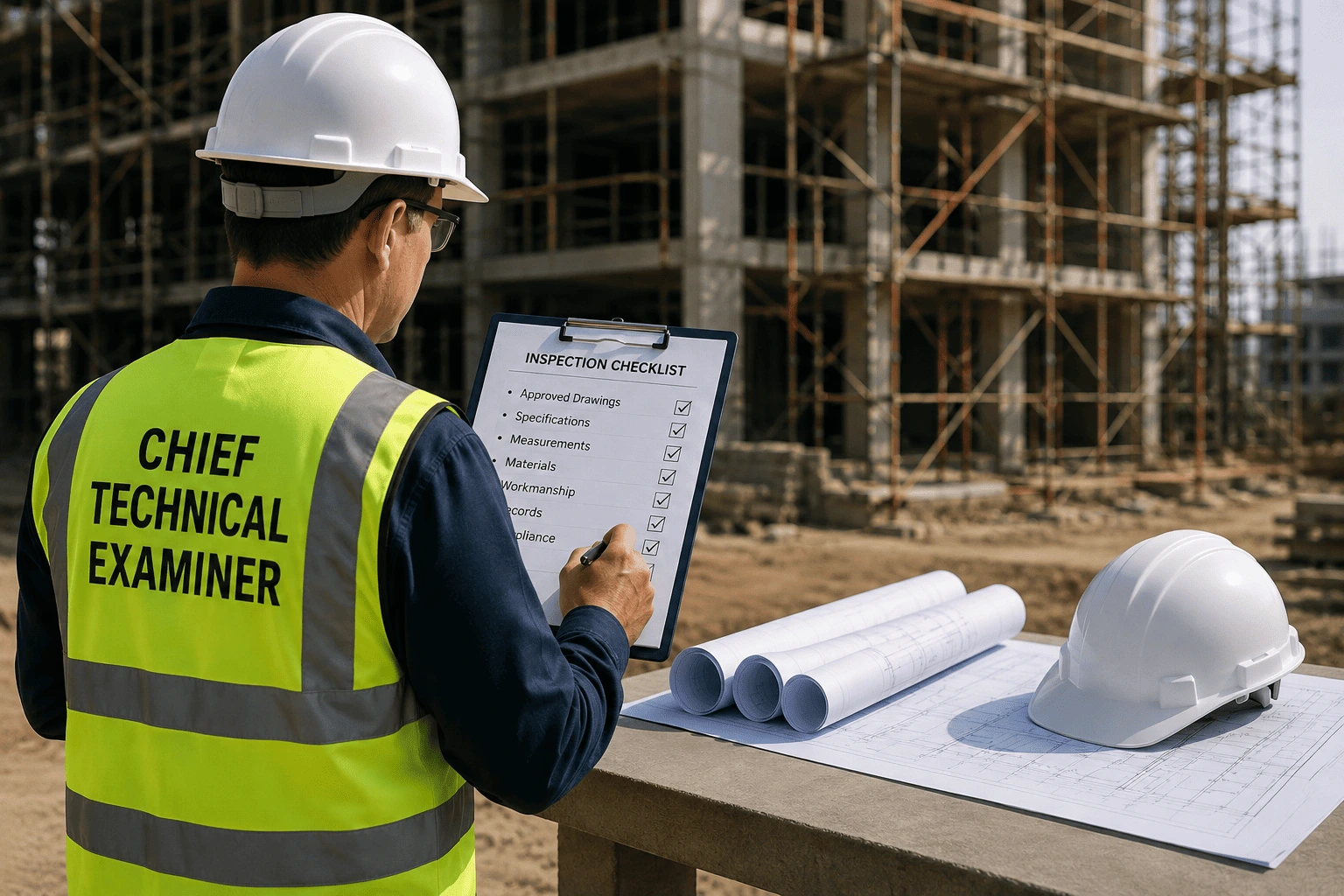
A Chief Technical Examiner is generally concerned with checking technical work rather than carrying out the project work itself. The title can sound like a senior engineering or management position, but the actual function is closer to examination: looking at what was approved, what was recorded, and what was actually done.
That means the role sits between technical requirements and the evidence available to check whether those requirements were followed. The exact authority can vary by organization and applicable rules, so the title should not be treated as a universal job description.
What Is a Chief Technical Examiner?
A Chief Technical Examiner examines technical work against approved requirements and available records. The work may involve drawings, specifications, measurements, approvals, project records, and observations from the actual site. The point is not simply to collect documents but to see whether the documented requirements match what was carried out.
Inspection and verification are part of that process. An examiner may look at a site, review measurements, check records, or compare completed work with the relevant technical requirements. Reporting then provides a way to record what was found and what evidence supports the finding.
The role is different from designing or executing a project. A project designer is responsible for creating the technical design, while a contractor or project team carries out the work. A routine project manager may be responsible for coordinating that work. The examiner’s job is to independently check the work and identify technical discrepancies or other issues within the scope of the examination.
The limits of the role depend on the organization. One Chief Technical Examiner may have authority defined by a particular set of government or organizational rules, while another position with the same title may operate under different requirements. The title alone does not settle those details.
What Does a Chief Technical Examiner Actually Examine?
The examination can cover both paperwork and physical work. Technical specifications, approved plans, measurements, project records, and other relevant documents provide the reference point for checking what happened on the project.
Actual site work may then be compared with those approved documents and required standards. If the recorded quantity does not match the work observed, or the materials and workmanship do not appear consistent with the stated requirements, that difference becomes something to examine rather than something to assume away.
The same applies to approvals and technical records. Quantities, measurements, supporting documents, and required approvals can contain inconsistencies that are not obvious from looking at one record by itself. Comparing them is what gives the examination its practical value.
A technical examination, then, is not just a paperwork exercise. It is the relationship between the approved requirement, the available evidence, and the work that exists on the ground.
Core Responsibilities of a Chief Technical Examiner
A Chief Technical Examiner’s responsibilities extend beyond looking at a project site. The examination can involve site conditions, technical records, approved documents, measurements, and other material needed to determine whether the work matches the requirements it was supposed to meet.
Reviewing technical documentation is part of that work. Missing records, inconsistent measurements, unclear approvals, or questionable entries can matter because they may affect how the actual work is assessed. The examiner may also check whether the work follows the applicable specifications, approved requirements, and technical standards.
When a deficiency or irregularity is found, it needs to be identified and documented rather than left as a general concern. The same applies to potential technical risks that are supported by the examination. Findings are then recorded in a report, with the supporting evidence and technical records that explain how the finding was reached.
Recommendations belong in that record as well, but they should remain connected to the actual findings. A recommendation that cannot be traced back to an observed condition, document, measurement, or applicable requirement is harder to assess.
How a Technical Examination Leads to Findings
The examination becomes meaningful when the different pieces of evidence are checked against each other. A measurement in a project record may be compared with the approved documentation and the work observed at the site. A specification may be checked against the material or workmanship actually used.
This is where a difference between documentary evidence and site observations can become important. The existence of a discrepancy does not by itself establish how serious it is. A minor technical variance and a deficiency that affects compliance or the quality of the work are not necessarily treated the same way.
The finding should therefore rest on what can actually be established from the available evidence and the applicable requirements. Assumptions can make a report sound more certain than the examination supports, especially when records are incomplete.
A useful distinction in the report is between what was observed, what requirement was involved, what deficiency was identified, and what recommendation follows from it. Keeping those elements separate makes the technical basis of the finding easier to examine.
Chief Technical Examiner vs Other Technical and Project Roles
The main difference between a Chief Technical Examiner and a project manager is the purpose of the work. A project manager is generally concerned with getting the project executed and managed, while the examiner’s role is centered on independent technical checking and examination. The exact division of authority still depends on the organization.
An engineer or designer can be responsible for developing technical designs, drawings, or specifications. A technical examiner is looking at whether the work and records align with the approved technical requirements. Those roles can involve similar technical knowledge without being the same job.
The distinction matters when a problem is found. Identifying and documenting a technical deficiency does not automatically make the examiner responsible for fixing it. Corrective action may sit with the project team, responsible organization, contractor, or another authority under the applicable rules.
Job titles alone do not settle these boundaries. Two organizations can use similar titles while assigning different responsibilities, so the actual role definition and governing rules matter more than the name on the position.
Skills and Professional Judgment the Role Requires
The technical side of the role starts with being able to read the material being examined. Drawings, specifications, measurements, quality requirements, and project records all need to make sense before a comparison can be made properly.
Analytical judgment matters because the examiner is often working across different sources rather than relying on one document. A record may appear complete on its own but look different when checked against the actual work or another approved document.
Attention to detail also matters. A small discrepancy may be insignificant, or it may point to a larger problem. The examiner needs enough technical understanding to tell the difference rather than treating every variation as equally serious.
The findings also have to be written clearly. Technical observations are not useful if the report leaves the basis for them unclear. Professional integrity and impartial judgment matter for the same reason: the finding should follow the evidence and applicable requirements, not the preferred outcome of the project team.
What Happens After the Examiner Finds a Problem?
A technical deficiency or irregularity is normally recorded as part of the examination findings. The record should show what the finding is based on, whether that is a measurement, document, site observation, or other available evidence.
Recommendations should relate directly to the finding rather than becoming a separate list of general concerns. This keeps the report tied to what the examination actually established.
The examiner’s role does not necessarily extend to carrying out the correction. The responsible organization or project team may have that responsibility under the applicable rules. That distinction becomes important when a finding is disputed or challenged, because the technical basis for the finding needs to remain clear even when the parties disagree with it.
What to Keep in Mind
A Chief Technical Examiner is primarily concerned with examining technical work against the requirements, records, and evidence available for the project. The role is not simply a site inspection, and it is not the same as managing the work being examined.
The value of the examination depends on how clearly its findings can be supported by the available evidence and applicable requirements.
The exact authority of the position can differ between organizations, so the relevant rules and role definition remain the final reference for what a particular Chief Technical Examiner is responsible for.
