

It’s tempting to think of a chair as simply “something to sit on.” But when you consider how much time is actually spent seated during a typical workday, the chair starts to look less like furniture and more like essential equipment — no different from a laptop or a reliable internet connection.
Poor seating doesn’t announce itself immediately. It builds slowly. A slight slouch here, a lack of lumbar support there, and over weeks and months, the body starts to compensate in ways that lead to real discomfort. Lower back pain is the most commonly reported issue among office workers, followed closely by neck strain, shoulder tension, and stiffness in the hips and legs. Poor circulation is another quiet consequence — sitting for extended periods without proper support can restrict blood flow, particularly in the legs, leading to swelling or discomfort by the end of the day.
What makes this especially important is that these issues rarely stay confined to work hours. Chronic discomfort from a bad chair often follows people home, affecting sleep, mood, and overall energy levels. In contrast, a well-designed, supportive chair works with the body rather than against it. It encourages a natural sitting posture, keeps the spine aligned, and reduces the small but constant muscular effort the body makes to compensate for poor support.
Beyond the physical side, there’s a productivity dimension that’s easy to underestimate. When you’re not distracted by discomfort, you’re able to concentrate for longer stretches without needing to shift, stand, or take unplanned breaks just to relieve tension. In this sense, an office chair isn’t just about health — it’s directly tied to how much focused, quality work you’re able to produce in a day.
Simply put, the chair you choose has a ripple effect across your health, your energy, and your output. It deserves far more consideration than most people give it.
Understanding Ergonomics: The Science Behind a Good Chair
The word “ergonomic” gets used so often in furniture marketing that it can start to feel like a buzzword rather than a meaningful standard. But ergonomics is a genuine field of study — the science of designing equipment and spaces to fit the human body, rather than forcing the body to adapt to the equipment.
When applied to office chairs, ergonomics is about creating a seat that supports the spine’s natural curve, distributes body weight evenly, and allows for a full range of adjustability so the chair can be tailored to different body types and working styles. A chair built on solid ergonomic principles doesn’t just “feel” comfortable in the showroom — it actively reduces strain during real, extended use.
There are a few core ideas that ergonomic design is built around. First is spinal alignment: the human spine has a natural S-curve, and a good chair supports that curve rather than flattening it, which is what happens when someone slouches in an unsupportive seat for hours at a time. Second is weight distribution — a well-designed seat pan and backrest spread pressure evenly across the body instead of concentrating it on specific points, which is often the cause of numbness or soreness after long sitting sessions. Third is adjustability, since no two bodies are the same; a chair that can be customized in height, depth, tilt, and support is far more likely to fit a wide range of users properly.
Understanding these principles matters because it shifts the way you shop. Instead of simply picking the chair that looks most premium or has the most cushioning, you start evaluating chairs based on whether they genuinely support the body through a full workday — which is really what “ergonomic” is supposed to mean in the first place.
Key Features to Look for in an Office Chair
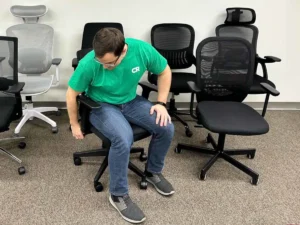
Once you understand the ergonomic principles behind good seating, the next step is knowing exactly which features to look for when comparing chairs. Not every chair needs every feature, but the following are the ones that make the biggest difference in day-to-day comfort and long-term health.
Adjustable Seat Height and Depth
A chair that only offers one fixed height will rarely fit everyone properly. Adjustable seat height allows you to position your feet flat on the floor with your knees bent at roughly a 90-degree angle — a posture that reduces pressure on the lower back and improves circulation in the legs. Seat depth adjustment is just as important, though often overlooked. If the seat is too deep, it can press uncomfortably behind the knees; if it’s too shallow, your thighs won’t get proper support. The ability to adjust both ensures the chair actually fits your body rather than the other way around.
Lumbar Support
The lower back naturally curves inward, and sitting for long periods without support for that curve tends to cause the spine to slump, which leads to slouching and, eventually, chronic discomfort. Built-in or adjustable lumbar support helps maintain this natural curve, reducing strain on the lower back muscles and spinal discs. Some chairs offer fixed lumbar support, while higher-end models allow you to adjust the height and depth of the support to match your specific spine shape.
Armrests and Headrests
Adjustable armrests do more than just give your arms somewhere to rest — they help keep your shoulders relaxed and your wrists in a neutral position while typing, which reduces tension that can otherwise build up over hours of screen work. Headrests, while not essential for everyone, are particularly useful for people who spend long stretches on video calls or who prefer to recline periodically throughout the day, as they provide support for the neck and reduce strain from holding the head upright for extended periods.
Swivel and Mobility
A swivel base paired with smooth-rolling casters allows you to move around your workspace without twisting your spine or overreaching for items just out of arm’s reach. This might seem like a minor convenience, but over a full workday, the reduction in repetitive twisting and stretching motions adds up, particularly for people who frequently shift between a desk, a filing cabinet, or a second monitor.
Tilt and Recline Function
The ability to tilt or recline the backrest allows for small shifts in posture throughout the day, which helps prevent the stiffness that comes from staying locked in one position for too long. Some chairs offer a simple tilt tension adjustment, while others include a full recline lock, letting you lean back for a short break or a more relaxed working position without losing support.
Breathable Materials
Material choice affects comfort just as much as structural design. Mesh-backed chairs are popular because they allow airflow, helping to keep the body cool during long working hours — a meaningful benefit in warmer climates or poorly ventilated offices. Leather and upholstered fabric chairs, on the other hand, tend to offer a more polished, professional look and can feel more plush, though they may retain heat more than mesh and typically require more maintenance over time.
Health & Productivity Benefits of an Ergonomic Chair
The case for investing in a well-designed office chair becomes clearer when you look at the specific benefits it delivers, both physically and in terms of daily performance.
Improved Posture: Proper lumbar and seat support encourage the body to maintain a more natural, upright position throughout the day, reducing the tendency to slouch — which is one of the leading contributors to long-term back strain.
Reduced Pain and Fatigue: By distributing body weight evenly across the seat and backrest, an ergonomic chair minimizes the pressure points that often lead to soreness, stiffness, and general fatigue by the end of the day.
Enhanced Productivity: Comfort and focus are closely linked. When the body isn’t distracted by discomfort, it becomes easier to maintain concentration for longer stretches, resulting in fewer unplanned breaks and more consistent output.
Better Circulation: Chairs that support proper leg positioning help prevent the blood flow restriction that can occur during long periods of sitting, reducing the risk of swelling and the discomfort that comes with poor circulation.
Long-Term Health: Beyond daily comfort, consistent use of a supportive chair contributes to better spinal health over months and years, lowering the risk of chronic musculoskeletal issues that are increasingly common among people in desk-based roles.
Taken together, these benefits illustrate why an ergonomic chair should be viewed less as a luxury and more as a foundational piece of a healthy, productive workspace.
Types of Office Chairs & Which One Fits Your Work Style
Not every worker has the same needs, and the “best” chair often depends heavily on how a person actually works day to day.
Mid-back ergonomic chairs with swivel and tilt functions tend to suit creative professionals or anyone who moves frequently between tasks, offering flexibility without unnecessary bulk.
High-back executive chairs, often finished in leather, are a strong fit for managers or executives who value a more polished, professional appearance while still getting full upper-body support — particularly useful for people who spend significant time on video calls or client meetings.
Compact mesh task chairs are well suited to smaller home offices, offering solid ergonomic support without taking up much space, which matters increasingly as more people set up dedicated work areas within smaller apartments or shared rooms.
Chairs with adjustable headrests are especially valuable for anyone whose day involves frequent video meetings, since they help ease neck tension that builds up from holding the head in a fixed forward position for long stretches.
For shared or collaborative workspaces, a chair with quick, intuitive adjustability is often the better choice, since multiple people may use the same seat throughout the week and need to reconfigure it easily.
Matching the chair type to your actual working pattern — rather than simply choosing the most visually appealing option — tends to result in far better long-term comfort and satisfaction.
Budget vs Premium: Affordable Options vs High-End Investment
One of the most common questions when shopping for an office chair is whether it’s worth spending more, or whether a budget-friendly option can do the job just as well.
The honest answer is that it depends on how the chair will be used. For occasional or light use, a well-reviewed affordable chair with basic adjustability — height, back support, and a reasonably comfortable cushion — can be more than sufficient. Many budget chairs today include features that were once reserved for premium models, such as breathable mesh backs, basic lumbar support, and swivel bases with smooth-rolling casters.
However, for anyone spending the bulk of their workday seated, investing in a higher-end chair often pays off over time. Premium chairs typically offer more precise adjustability — including seat depth, adjustable lumbar support, and multi-position armrests — along with more durable materials that hold up better to years of daily use. The higher upfront cost is often offset by a longer lifespan and a reduced risk of the health issues associated with poor seating, which can carry their own long-term costs.
A practical approach is to set a budget based on how many hours per day the chair will actually be used. The more time spent seated, the more it makes sense to prioritize ergonomic quality over price alone — since discomfort from a poorly made chair tends to become far more expensive, in terms of both health and productivity, than the initial savings suggested.
Materials Guide: Mesh vs Leather vs Fabric — Pros & Cons
Material choice plays a bigger role in comfort than many people initially realize, and each option comes with its own set of trade-offs.
Mesh is widely favored for its breathability, allowing air to circulate and keeping the body cool during long hours of work — a particularly strong advantage in warmer climates or offices without strong air conditioning. Mesh chairs also tend to be lighter and often more affordable, though the seat cushion (as opposed to the backrest) is sometimes made of a firmer foam rather than mesh, since full mesh seating can feel less supportive over time.
Leather (both genuine and high-quality faux leather) offers a more polished, professional appearance and a plush, cushioned feel that many people find more comfortable for extended sitting. It’s also generally easier to wipe clean than fabric. The trade-off is that leather can retain heat, making it less breathable than mesh, and genuine leather typically comes at a higher price point while requiring occasional conditioning to prevent cracking or wear over time.
Fabric upholstery sits somewhere in between — often more breathable than leather while offering a softer, more textured feel than mesh. Fabric chairs can be a good middle-ground option, though they may be more prone to staining and generally require more maintenance to keep looking clean over years of use.
Ultimately, the right material depends on personal priorities: those who run warm or work in hot climates often lean toward mesh, while those who value a more executive look or plush feel may prefer leather or fabric.
How to Choose the Right Office Chair for Your Needs

With so many features and options available, choosing the right chair can feel overwhelming. Breaking the decision into a few clear steps makes the process far more manageable.
Start with your budget. Knowing how much you’re able to spend narrows the field considerably and helps avoid getting distracted by chairs outside your realistic range.
Consider your daily sitting time. Someone spending seven or more hours a day at a desk has very different needs than someone using a chair for just a few hours, and should prioritize ergonomic features accordingly.
Check the adjustability. Look specifically for adjustable seat height, lumbar support, and armrests, since these are the features that most directly affect comfort and posture over time.
Test before you commit, if possible. Sitting in a chair — even briefly — often reveals more than reading a spec sheet ever will. If testing in person isn’t an option, look closely at return policies so you have flexibility if the chair doesn’t feel right once it arrives.
Factor in material and space. Choose a material that suits your climate and maintenance preferences, and make sure the chair’s size fits comfortably within your available workspace without feeling cramped.
Following these steps in order — budget, usage, features, testing, and fit — tends to lead to a far more satisfying decision than shopping based on appearance alone.
Maintenance & Care Tips to Extend Your Chair’s Life
Even the best office chair requires a bit of ongoing care to perform well over the years. Regularly checking for loose screws, worn casters, or squeaky mechanisms can prevent small issues from turning into bigger problems. Cleaning fabric or mesh surfaces periodically helps maintain both appearance and hygiene, while leather chairs benefit from occasional conditioning to prevent cracking or drying out.
It’s also worth keeping chairs out of direct sunlight where possible, since prolonged UV exposure can cause fading and premature wear on both fabric and leather. Lubricating moving parts — such as the tilt mechanism or casters — every so often helps keep the chair functioning smoothly and reduces unnecessary strain on its components.
Finally, it’s important to respect the chair’s weight capacity and avoid unnecessary overloading, as this can shorten its lifespan considerably. A few minutes of maintenance every month or two is a small price to pay for extending the life of a chair you’ll likely be sitting in for years to come.
Conclusion
Choosing the right office chair is about far more than finding something that looks good in your workspace. It’s a decision that directly affects your posture, your comfort, your health, and — ultimately — how well you’re able to work day after day. From understanding the core principles of ergonomics to knowing which features genuinely matter, weighing budget against long-term value, and choosing the right material for your needs, every part of the decision plays a role in how the chair will serve you over time.
The right chair supports your body rather than working against it, allowing you to focus on your work instead of shifting constantly to relieve discomfort. Whether you’re setting up a home office, upgrading a corporate workspace, or simply replacing a chair that’s been causing more harm than good, taking the time to choose thoughtfully is well worth the effort.
